

Whether you manage an office building in Downtown, own a restaurant in Nob Hill, or operate a multi-unit residential property in the Northeast Heights, fire safety compliance is a critical priority in Albuquerque. Meeting local codes not only protects lives and property, but it also shields your business from heavy fines, insurance denials, and liability.
Among the most fundamental fire protection requirements in the city are those governing portable fire extinguishers. Under the New Mexico Fire Code, which adopts the International Fire Code (IFC), and Albuquerque local ordinances, commercial spaces must follow strict rules regarding extinguisher placement, mounting, and annual certification.
Here is everything you need to know about the 75-foot travel distance rule, mounting requirements, and the annual certification process in Albuquerque, featuring the local expertise of Fire Safety Industries.
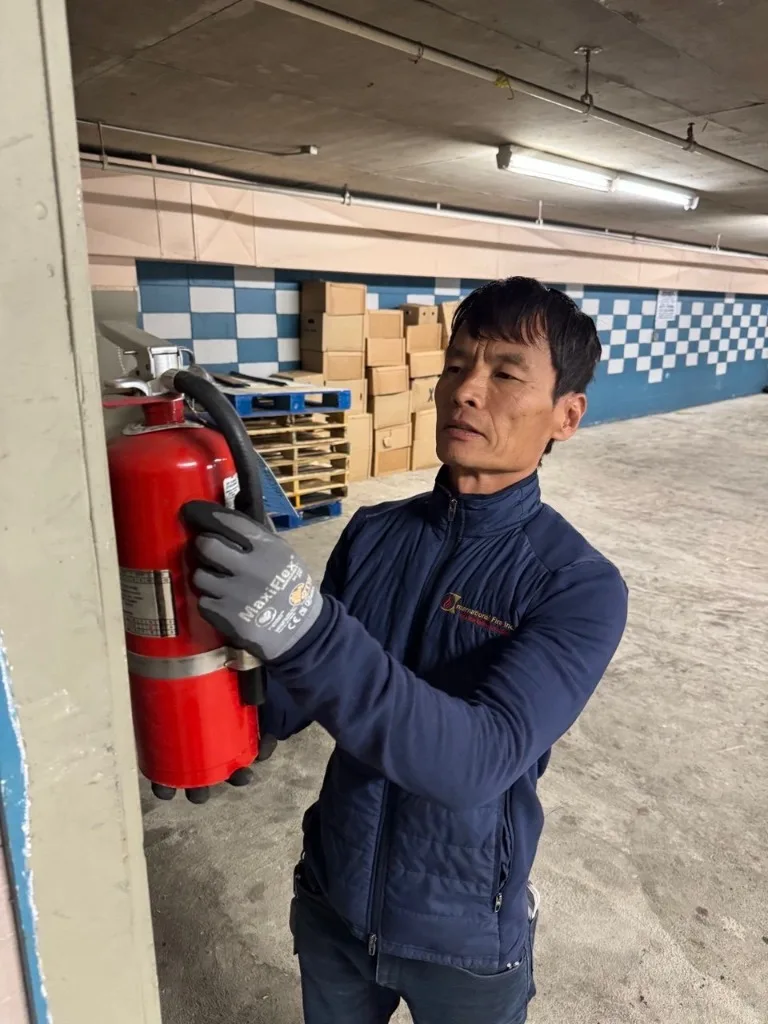
The 75-Foot Travel Distance Rule (IFC & NFPA 10)
One of the most common questions building owners ask is, "How many fire extinguishers do I need, and where should they be placed?"
The answer is dictated by the maximum travel distance. According to the New Mexico Fire Code, International Fire Code (IFC) Chapter 9, Section 906, and NFPA 10 (Standard for Portable Fire Extinguishers), the maximum travel distance to a Class A portable fire extinguisher in a commercial space must not exceed 75 feet (75').
This means a building occupant must not have to walk more than 75 feet from any point in the building to reach a fire extinguisher. To plan your layout correctly, consider the following rules of thumb:
- Class A Extinguishers (Ordinary combustibles like wood, paper, trash): Maximum travel distance of 75 feet.
- Class B Extinguishers (Flammable liquids like gasoline, oil, paint): Maximum travel distance of 30 or 50 feet, depending on the severity of the hazard.
- Class K Extinguishers (Commercial kitchens & cooking fats): Must be located within 30 feet of the cooking equipment (often installed in conjunction with a commercial kitchen suppression system).
It is important to remember that travel distance is measured along actual paths of travel (including around corners, partitions, and equipment), not as the crow flies. A licensed professional from a trusted service like Fire Safety Industries can perform a code-compliant layout analysis to map out the ideal placement for your property.
Pro Tip: Extinguishers must be clearly visible and easily accessible. If they are blocked by inventory, office furniture, or columns, they will fail local fire marshal inspections.
How Fire Extinguishers Must Be Mounted
Simply leaning an extinguisher against a wall or leaving it on the floor is a serious code violation. Fire extinguishers must be properly installed and mounted using one of the following methods:
- Hangers or Brackets: Securely mounted to the wall with hangers or brackets supplied by the manufacturer.
- Cabinets: Installed inside specialized, clearly labeled wall-mounted cabinets.
Height Regulations for Mounting:
- Extinguishers weighing under 40 lbs must be installed so that the top of the extinguisher is not more than 5 feet (60 inches) above the floor.
- Extinguishers weighing over 40 lbs must be installed so that the top is not more than 3.5 feet (42 inches) above the floor.
- In all cases, the bottom of the extinguisher must clear the floor by at least 4 inches.
Annual Certification & Tagging Requirements
In Albuquerque, fire extinguishers are not "set-it-and-forget-it" equipment. Every portable fire extinguisher in a commercial or multi-unit residential building must be certified every year.
Annual service must be performed by a certified technician licensed to inspect fire extinguishers in New Mexico. During an annual inspection, a certified technician will:
- Verify physical damage, corrosion, or leaks.
- Check the pressure gauge to ensure the unit is fully charged.
- Examine the nozzle, hose, and safety pin.
- Confirm the weight and volume of the extinguishing agent.
- Attach a new, certified inspection tag showing the month and year of service, in compliance with New Mexico regulations.
Without a valid annual tag, your building is out of compliance. Fire marshals checking businesses in Albuquerque will examine these tags first. If your tags are expired, you can face severe fines and code violation citations.
Serving Albuquerque Since 1976: Fire Safety Industries
If you are an Albuquerque property manager or business owner, you don't have to navigate these complex codes alone. **Fire Safety Industries** has been proudly serving Albuquerque and surrounding New Mexico communities since **1976**. With over 45 years of dedicated local experience, our certified team knows the local codes and building designs inside and out.
From initial design layouts to annual inspections, tagging, recharging, and high-quality employee training, Fire Safety Industries ensures your facility remains completely up to code and ready to handle emergencies.