Operating a successful restaurant or food service establishment in Albuquerque means balancing a hundred tasks at once: food quality, staff coordination, supply chain logistics, and guest experience. However, there is one critical priority that must never be overlooked—fire safety compliance.
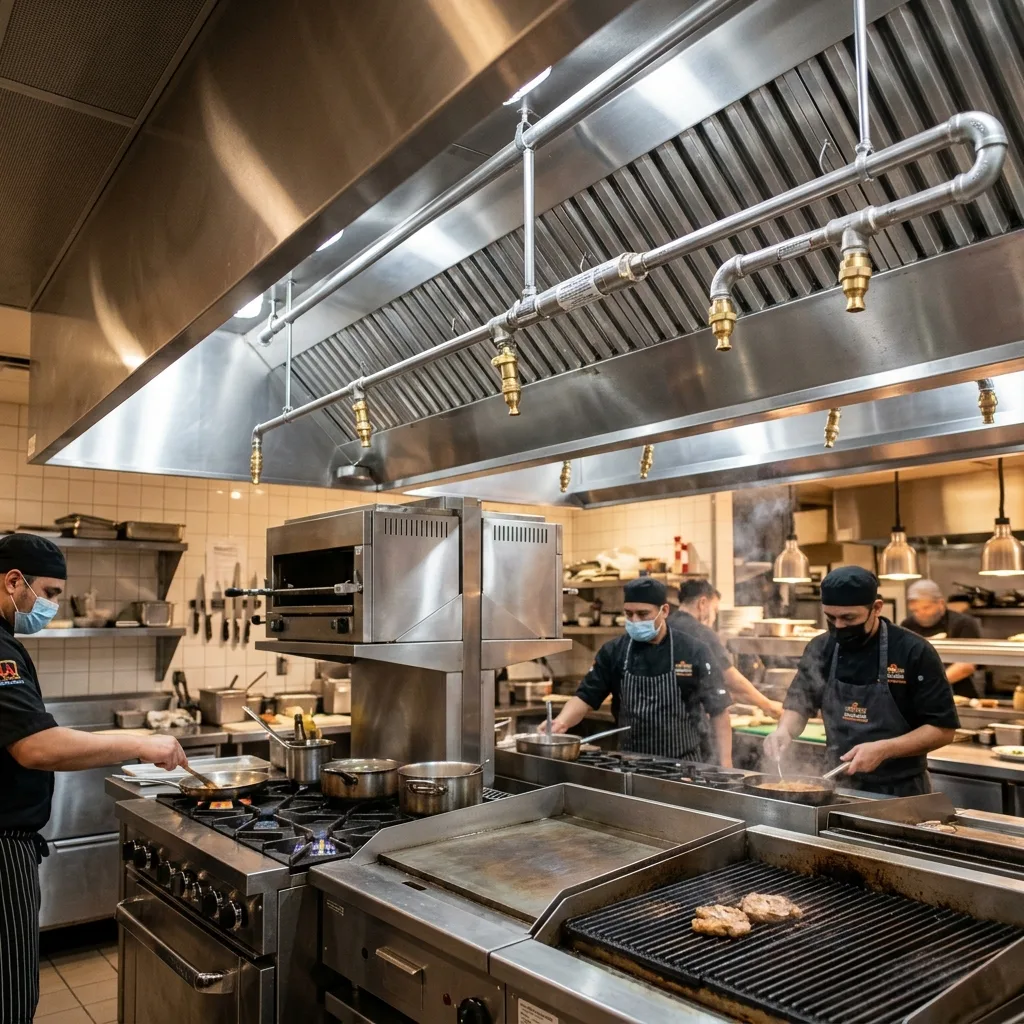
Commercial kitchens are high-risk environments. The combination of open flames, high temperatures, electrical cooking surfaces, and highly combustible cooking oils makes commercial kitchens the single leading source of B2B structure fires. To prevent catastrophic property loss and protect staff and guests, local code authorities in Albuquerque enforce strict standards regarding commercial kitchen fire suppression systems.
Here is your comprehensive guide to the NFPA standards, city regulations, semi-annual inspection schedules, and essential maintenance steps required to keep your commercial kitchen compliant and safe.
Which Codes Govern Albuquerque Commercial Kitchens?
Albuquerque local inspectors and the New Mexico State Fire Marshal enforce regulations aligned with national safety standards. Specifically, commercial kitchens in Albuquerque are governed by:
- NFPA 96: The Standard for Ventilation Control and Fire Protection of Commercial Cooking Operations. This outlines the layout, design, and overall construction requirements for hoods, grease filters, ductwork, and fire suppression systems.
- NFPA 17A: The Standard for Wet Chemical Extinguishing Systems. This governs the installation, testing, and maintenance of the liquid agent systems commonly used to protect commercial hoods, ducts, and cooking surfaces.
- UL 300: The testing standard for commercial kitchen fire systems. Since the mid-1990s, high-temperature vegetable oils have replaced animal fats, requiring modern, wet-chemical systems that can cool and smother deep-fryer fire hazards. Dry-chemical systems are no longer compliant.
The Semi-Annual (6-Month) Testing Requirement
One of the most critical aspects of fire code compliance is the mandatory inspection frequency. Under NFPA 17A, Section 7.3, and the Albuquerque Fire Code, every wet chemical kitchen fire suppression system must undergo a professional inspection and testing cycle at least once every six months (semi-annually).
Why is this interval so frequent? Over six months, grease vapors from fryers, ranges, and griddles build up on system nozzles and fusible links. These accumulations can delay or completely prevent the system from activating during a grease fire. A semi-annual maintenance check ensures that all elements are clean, clear, and ready to engage instantly.
During this mandatory test, a certified technician will check:
- Fusible Links: The temperature-sensitive links that melt to trigger automatic agent release must be replaced every 6 months to guarantee they operate properly.
- Nozzle Alignment & Blow-Off Caps: Verification that nozzles point directly at the target appliances and that blow-off caps are present and clear of grease blockages.
- Automatic Gas & Electrical Shut-Offs: Testing to ensure that when the suppression system trips, the gas line and electrical power to all appliances under the hood are immediately severed, stopping the fuel source.
- Manual Pull Station: Checking that the manual pull-station functions as a failsafe trigger and is completely unobstructed.
- Agent Cylinder Pressure: Testing the wet chemical agent canisters for correct weight and pressure levels.
Important Compliance Note: Overdue inspection tags are the first things local fire marshals look for. Failing to obtain a new tag every six months can lead to immediate operational shut-downs, heavy fines, and the potential voiding of your restaurant's commercial property insurance policy.
Class K Fire Extinguishers: The Required Companion
Having a hood suppression system is only half the battle. To meet local ordinances, your kitchen must also have a portable Class K fire extinguisher installed nearby.
Class K extinguishers are specifically formulated with a potassium acetate-based wet chemical agent designed to fight high-temperature kitchen grease and cooking oil fires. Standard Class ABC extinguishers are not sufficient for commercial deep fryers and can splash hot oil, spreading the fire.
Under the 30-foot rule, a Class K extinguisher must be located within a 30-foot travel distance of any cooking appliance that uses combustible cooking media (such as fryers and griddles). Additionally, the extinguisher must be clearly visible, easily accessible, and undergo the same annual inspection and tagging as other portable extinguishers. For details on general placement and height regulations, read our comprehensive Albuquerque fire extinguisher installation requirements guide.
FSI New Mexico: Protecting Albuquerque Restaurants Since 1976
For half a century, the team at **Fire Safety Industries** has been the premier fire safety partner for restaurants, hotels, schools, and corporate kitchens throughout Albuquerque. We understand that restaurant margins are tight and time is critical, which is why we specialize in prompt, non-intrusive compliance inspections and testing services.
Our certified technicians will keep your facility fully compliant with NFPA 17A and NFPA 96 guidelines, managing your testing schedule so you never miss an inspection date. From fusible link replacements and nozzle cleanings to full system test logs and Class K extinguisher maintenance, FSI has your kitchen covered.