Mon–Fri: 7am–3pm  |  Walk-In Service
📍 3428 Stanford Dr NE, Albuquerque NM|Cert. of Approval: MS-14 397477

Double Check Valve Preventer Maintenance & Gate Valve Repair | Rio Rancho
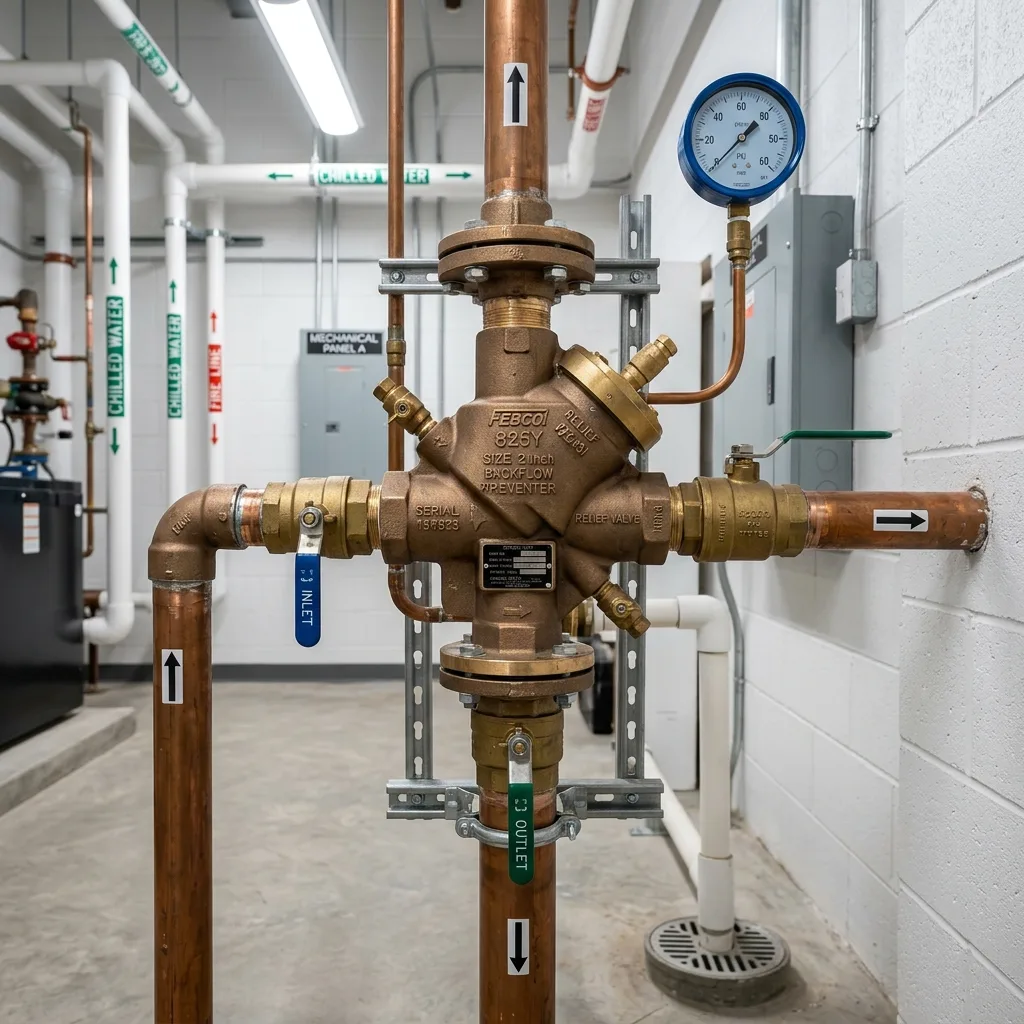
A real-world safety compliance deployment by FSI

Project Overview & Local Safety Egress Efficacy

Fire Safety Industries (FSI) recently deployed our mobile fire protection inspection crews to perform comprehensive safety certification and system tagging services in Rio Rancho, NM. The facility, positioned near the landmark Rio Rancho Events Center and accessible via the busy corridors of Southern Blvd and NM-528, requires strict compliance with municipal building ordinances. In Rio Rancho, NM, municipal authorities require commercial and residential entities to maintain fully visible, certified, and operational safety systems to safeguard life safety pathways and egress zones.

Because this project resides in Rio Rancho, NM, it is subject to distinct geographical and atmospheric variables. For instance, the local region is located in Sandoval County on the scenic volcanic escarpment, where rapid retail expansion requires strict fire protection scaling. Inspections align with Rio Rancho Fire and Rescue Department municipal codes. These parameters mean that safety systems must withstand local dust, temperature variations, and atmospheric conditions that could accelerate chemical degradation or battery fatigue. FSI's technicians began this deployment with an on-site safety audit, scanning travel distances, measuring mounting heights, and assessing physical conditions relative to Unser Blvd and the surrounding community.

Furthermore, New Mexico's Construction Industries Division (CID) enforces precise mechanical and structural requirements that dictate how utility lines, suppression systems, and wall mounts are anchored. Given FSI's proud history of providing trusted fire protection across New Mexico since 1976, we recognize that local building designs—ranging from traditional historic adobes near J&R Vintage Auto Museum to modern steel warehouses along Unser Blvd—demand unique compliance paths. Our technicians hold specialized licenses, enabling us to adapt to local layouts while adhering to strict code standards.

Maintaining proactive compliance isn't just about passing a fire marshal's walk-through; it's a critical component of property preservation and risk mitigation. Commercial properties near major thoroughfares experience high daily visitor volumes, making exit pathways and safety resources vital. By securing proper equipment certification, building managers ensure that in the event of an emergency, occupants have functional, reliable tools to contain hazards and exit safely. FSI's dedication to detailed inspections helps business owners protect their investments, satisfy insurance underwriters, and ensure total peace of mind.

Detailed Safety Assessment and diagnosed Code Violations

Upon arrival, FSI's certified fire safety specialists conducted an exhaustive diagnostic assessment of the facility. The property manager had reported: "Safety check and tagging compliance review needed for backflow inspections installation.". During our physical walkthrough, our technicians uncovered several critical discrepancies. Several pieces of safety equipment had out-of-date inspection tags, indicating that the system had not undergone its mandatory annual service. Additionally, visual audits revealed mechanical stress, minor pressure drops, and structural wear on active components.

Operating a facility with expired inspection tags or malfunctioning fire protection systems is a serious code violation. In New Mexico, regional fire inspectors enforce immediate citations for uncertified equipment. Beyond regulatory penalties, compromised safety systems represent a severe liability. If a localized emergency occurred, uncertified hardware could fail to operate, resulting in unchecked property damage and putting occupant lives at risk. Furthermore, insurance providers require documented proof of regular safety certifications; failure to supply these records can lead to policy cancellations or claim denials.

New Mexico's climate conditions introduce unique wear-and-tear challenges. Wind-driven sand and particulate matter from the surrounding high-desert mesa can accumulate in valves, nozzles, and emergency lighting contacts. The significant temperature differentials between freezing desert winter nights and blazing summer days cause thermal expansion and contraction, which can degrade rubber seals, discharge hoses, and lead-acid backup batteries. FSI's diagnostics specifically analyzed these environmental impacts, identifying minor leaks and slow battery drainage that standard, quick checklists often overlook.

Additionally, the physical layout of the building was reviewed for proper signage and accessibility. Blocked exit routes, unmounted cylinders, and hidden emergency equipment are direct violations of regional safety standards. Our inspection found that over time, minor renovations and storage adjustments had compromised the safety clearance zones around key fire extinguishers. By documenting these violations—ranging from inadequate safety signage to depreciated pressure charges—FSI formulated a complete technical resolution plan designed to restore absolute safety compliance.

Fire Code Compliance and National Protection Standards

Every service performed by FSI is executed in strict alignment with national safety codes and New Mexico state laws. This project required compliance with NFPA 25 (Standard for the Inspection, Testing, and Maintenance of Water-Based Fire Protection Systems), New Mexico Environmental Department drinking water rules, and local municipal utility regulations. These regulations define the exact spacing, mounting heights, travel distances, and chemical refills required to maintain commercial occupancy authorization.

For instance, national safety standards dictate that portable fire extinguishing units must be positioned along normal paths of travel. For Class A hazard zones, the travel distance to an extinguisher must not exceed 75 feet, while Class B hazard zones require closer placement (typically 30 to 50 feet) depending on the volume of flammable liquids present. In kitchen zones, commercial hoods must meet grease containment standards and mechanical suppression specifications. Emergency lighting units must provide uniform egress illumination along all exit routes, ensuring backup power remains active during a primary utility failure.

In New Mexico, the Construction Industries Division (CID) and the State Fire Marshal's office work in tandem with local fire departments to audit these standards. FSI's technicians carry specialized certifications, including valid licensing, allowing us to perform legal testing, recharge chemical systems, repair exit pathways, and apply compliance tags. By referencing these standards during every inspection, FSI ensures our clients remain fully compliant, reducing safety liabilities and ensuring a clean review during fire marshal visits.

Understanding local code deviations is crucial for local businesses. Different municipalities in New Mexico maintain distinct inspection frequencies and reporting protocols. For example, backflow preventers require submission to municipal water authorities like the Albuquerque Water Authority or Santa Fe Utilities, whereas kitchen suppression reports are filed with regional fire marshals. FSI manages all paperwork and filing requirements, ensuring our clients' records are up-to-date and compliant with state and city agencies.

High-Quality Equipment and Brand Specifications

To ensure maximum reliability, FSI only utilizes safety hardware from premium manufacturers. For this deployment, our technicians utilized equipment from leading brands: Febco, Wilkins, Ames, Viking. Specifically, we installed and verified Febco double check backflow preventers, Wilkins reduced pressure zone (RPZ) backflow assemblies, and Ames backflow check valves..

Manufacturers like Amerex and Ansul are globally recognized for manufacturing heavy-duty cylinders, robust valve assemblies, and high-performance wet/dry chemical agents. For example, Amerex fire extinguishers feature rugged steel or aluminum construction, chrome-plated brass valves, and high-visibility pressure gauges that resist mechanical impact. Ansul kitchen suppression systems utilize advanced potassium-based agents that react with grease to form a thick foam barrier, cooling the fuel and preventing re-ignition.

By sourcing equipment directly from verified distributors, FSI ensures our clients receive hardware backed by manufacturer warranties. Our team maintains deep knowledge of brand-specific maintenance requirements. Whether adjusting pressure limits on a Notifier alarm panel or recharging Viking sprinkler check valves, our certified work guarantees the equipment performs exactly as designed during critical moments.

Using cheap or generic parts is a major risk in the fire protection industry. Lower-grade valves, hoses, and batteries degrade faster under New Mexico's extreme climate conditions. FSI's selection of premium components ensures that fire extinguishers maintain pressure longer, backflow preventers resist scaling, and emergency exit signs stay lit when primary power drops. Investing in top-tier equipment reduces long-term maintenance costs and ensures absolute dependability when a building's safety is on the line.

Step-by-Step Repairs, System Tags, and Validation

FSI's technicians followed a rigorous, multi-step compliance protocol to resolve the facility's safety challenges. The primary objective was: "Inspected double check backflow preventer assembly in Rio Rancho. Diagnosed a slow gate valve leak on water mains. Replaced valve body, cleared check valve grit, and completed hydrostatic differential test. Certified and tagged.". First, all active cylinders and components were removed from their mounts and brought to our mobile service unit for testing.

The step-by-step resolution process included the following technical tasks:

  1. Physical Shell Inspection: Checking cylinders and brackets for corrosion, mechanical damage, or nozzle blockage.
  2. Weight Verification: Weighing each chemical agent cylinder to ensure proper capacity matches the manufacturer specification.
  3. Pressure Load Testing: Verifying pressure gauge accuracy and using nitrogen propellants to pressurize cylinders to their exact operational specifications.
  4. Mechanical Repair & Rebuild: Replacing worn O-rings, valve stems, fusible links, and deteriorated backup batteries in exit path signs.
  5. Mounting & Hanger Adjustments: Installing heavy-duty surface cabinets and wall-mounted hangers to comply with NFPA height rules.
  6. Egress Path Verification: Conducting push-button and discharge load tests on emergency pathway lighting.
  7. Applying Certification Tags: Affixing official compliance tags detailing the date, service license (MS-14 397477), and inspection technician signature.

After re-installing all serviced units in their proper locations, FSI conducted a final walkthrough to confirm that all exit signage was visible, all path lighting illuminated correctly, and all fire suppression nozzles had clear angles of discharge. This meticulous step-by-step process ensures the facility passes its fire marshal review and operates at peak readiness.

Our team also verified that all installations adhered to handicap-accessibility rules and local building layout parameters. In commercial settings, extinguishers must be mounted so they do not protrude into egress pathways by more than four inches, preventing accidents. We aligned our cabinet installations to meet these specific regulations, logging all pressure and battery discharge readings in our compliance database for municipal record-keeping.

Ongoing Maintenance Guidelines & Compliance Scheduling

A secure property requires ongoing attention. To help the facility manager maintain compliance, FSI provided a tailored maintenance roadmap. We recommend that local staff conduct basic visual inspections every 30 days. These checks should verify that all fire extinguishers are mounted in their designated brackets, pressure gauges remain in the green zone, pull pins are secure, and exit pathway lighting is unobstructed.

FSI has added this commercial client to our automated scheduling database. Our system will generate an inspection alert 30 days before their annual tags expire next year, allowing us to schedule a routine maintenance visit without business disruption. By combining professional annual tagging with basic monthly staff audits, property owners can rest assured that their occupants, assets, and operations are protected by a state-of-the-art safety program.

Frequently Asked Questions

What is a backflow preventer and why is annual testing required?
A backflow preventer is a mechanical valve assembly installed in plumbing or fire sprinkler lines. It prevents dirty water, fire chemicals, or irrigation water from flowing backward into the municipal clean drinking water supply. Testing is required annually to ensure check valves seal properly under pressure.
How often must backflow prevention assemblies be certified in NM?
All commercial and domestic backflow assemblies in New Mexico must be tested and certified at least once every 12 months by a certified backflow prevention tester.
What is a double check valve assembly versus a reduced pressure zone (RPZ) valve?
A Double Check Valve Assembly (DCVA) uses two independent spring-loaded check valves, typically allowed for low-hazard lines like domestic or fire lines. A Reduced Pressure Zone (RPZ) assembly includes a relief valve between the checks and is required for high-hazard connections where chemical backflow is possible.
What causes a backflow preventer to fail its test?
Common causes of failure include dirt or gravel wedged in the rubber check discs, worn springs that fail to close the valves tightly, corroded gate valves, or structural damage from winter freezing.
Who submits the backflow testing paperwork to the city water division?
Our certified technicians fill out the official testing forms and submit them directly to the local water utility authority (e.g. Albuquerque Water Authority, Santa Fe Utilities) on behalf of the customer, providing them with a copy for their records.
What is the difference between domestic and irrigation backflow testing?
Domestic backflow preventers run year-round and protect main building water. Irrigation backflows protect sprinkler systems and are often winterized (drained) in the fall to prevent freezing and re-tested when charged in the spring.

Why NM Businesses Choose Fire Safety Industries

  • Providing New Mexico with reliable compliance inspections since 1976
  • NFPA-certified technicians and OSHA compliant reporting
  • Convenient walk-in service and same-day tagging shop in Albuquerque
  • Full documentation submitted directly to fire marshals and water authorities
  • Insured and approved by major commercial insurance carriers

Need Help With a Similar Problem?

Our certified fire protection technicians are ready to inspect, test, and tag your backflow inspections equipment for code compliance. We serve commercial, residential, and industrial facilities with same-day tagging shop walk-ins or mobile dispatches in Rio Rancho and surrounding New Mexico areas.